How a Tiny Worm Powered a Global Economy
Long before the Roman Empire, and all the way into the 17th and 18th centuries in France, the crimson worm was a hidden treasure.
Faith Ukaegbu
6/7/20261 min read
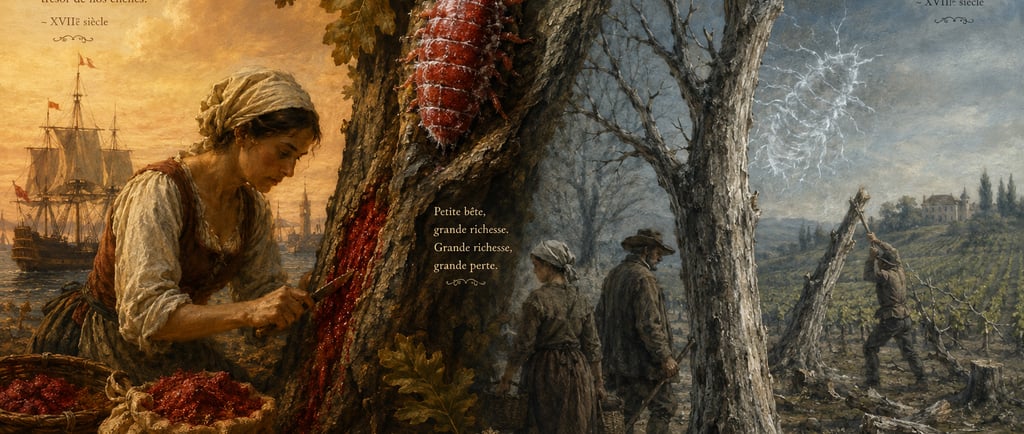
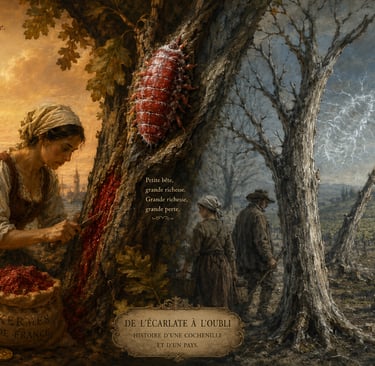
Long before the Roman Empire, and all the way into 17th and 18th century France, the crimson worm was a hidden treasure.
After the worm died on the kermes oak tree, it left behind a stunning crimson red stain. Peasants carefully harvested this dye—so much that a single village could collect 2,000 kg in a year, earning them 6,000 francs.
Why so valuable? The color was unmatched. France exported it to the Ottoman Empire, where scarlet was used to identify the elite. Merchants grew rich, but so did poor families—suddenly, they had access to real cash. The dye paid for taxes, rent, and survival.
But the boom didn't last.
A new rival appeared: the Mexican cochineal, another insect-based dye that was chemically superior and cheaper to produce. French textile makers abandoned the native kermes for the better colonial import.
Once the kermes lost its value, peasants had no reason to protect the oak trees. In 1770, a royal decree cleared the "wastelands" to plant vines for wine. The crimson worm lost its home. France lost a once-great source of wealth.
Today, the crimson worm is endangered.
So a tiny insect built an economic empire—fueled by ancient trade and French labor—only to be destroyed by globalization and agriculture. It's a powerful reminder: even the smallest creature can shape human history, and be erased by it.
The Doodle Spine
For all inquiries, contact us at:
Thedoodlespine@gmail.com
© 2026 The Doodle Spine. All rights reserved. | Privacy Policy