Behind the Scenes: How I Turn Sketches into Storytelling Magic
If you’ve ever watched one of my whiteboard animations and wondered, How does she do that?, this is your answer.
Faith Ukaegbu
10/18/20253 min read
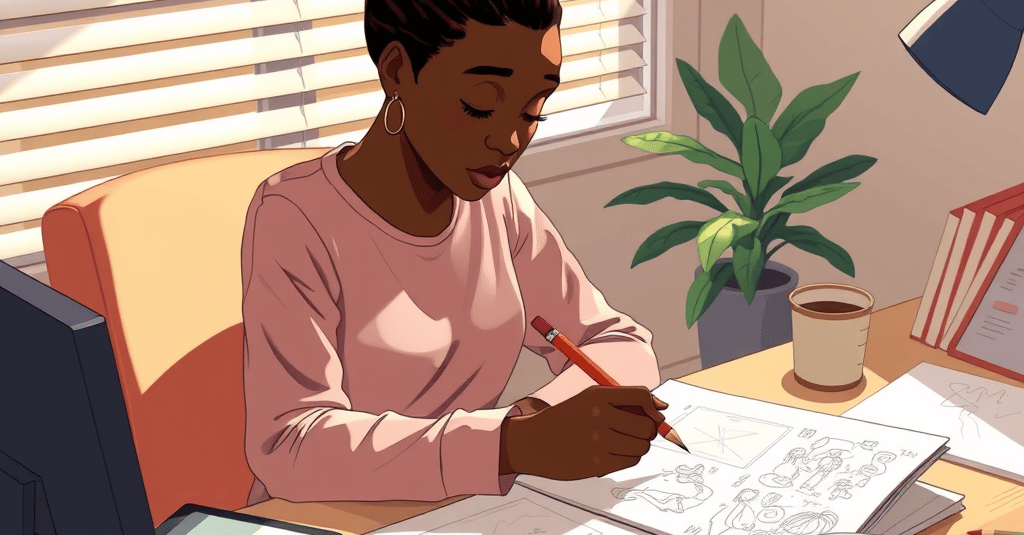
Behind every clean line and smooth transition, there’s usually a messy desk, a head full of ideas, and at least one forgotten cup of coffee. What looks simple on screen often begins as chaos — and I’ve learned to love that part.
When I started creating whiteboard animations, I thought it was all about drawing — the art, the speed, the technique. But over time, I realised something deeper: animation isn’t about drawing. It’s about emotion. It’s about translating a story into movement, rhythm, and meaning.
Step 1: The Idea That Starts It All
Every animation begins with a spark — a line from a book, a passing thought, or a single feeling that refuses to leave my mind.
One of my earliest projects was inspired by the sentence, “Every dream begins somewhere.” It sounded ordinary at first, but the more I doodled around it, the more it became a story about resilience — about how dreams aren’t always loud or perfect, but they start quietly, in the middle of everyday life.
That’s usually how it happens. One thought catches fire, and suddenly, I’m sketching nonstop until the story reveals itself.
Step 2: The Sketchbook Chaos
My sketchbook is a place where structure doesn’t exist. I draw fast and messy — lines, arrows, scattered notes, unfinished faces. Sometimes, I draw the same scene several times before something clicks.
I’ve learned to trust that process. The “messy middle” is where the best ideas show up. It’s the stage where nothing makes sense, but everything is possible. It’s also the most human part of creation — that uncertain space between idea and execution.
When I look back at my early sketches, I often smile. They remind me that every polished animation once began as a cluster of imperfect doodles.
Step 3: Bringing It to Life
Once the story takes shape, I start animating. This is where the sketches meet movement — where static ideas start breathing.
I think about pacing, tone, and energy. How should this line move? Where should the viewer’s eye rest? When should silence do the talking?
I also think about who I’m creating for — authors who want their stories to be seen, coaches who want to explain their message in a new way, or small business owners who want to make people feel something.
Animation is about emotion management as much as it’s about motion design. Every drawn line is meant to guide the viewer’s feelings toward curiosity, empathy, or inspiration.
Step 4: The Final Layer — Emotion
Once visuals and motion blend, I add sound. It could be a soft background tune, a subtle voiceover, or a single sound effect that brings everything together.
It’s usually at this stage that I feel the story come alive. A character’s gesture suddenly feels real. A simple line becomes powerful.
That’s the moment I wait for — the quiet realisation that what started as a doodle now feels human. Because that’s what storytelling really is: turning emotions into something people can see.
What I’ve Learned
Perfection kills creativity. Some of my favourite moments came from accidents.
Every doodle has a voice. You just have to listen to it long enough.
People don’t fall in love with the animation. They fall in love with what it makes them feel.
Why It Matters
For me, whiteboard animation is not just a service or a skill. It’s how I connect with people who have stories worth telling. Whether it’s a book, a brand, or a personal message — my goal is always to make it feel alive.
When someone messages me saying an animation made them emotional, that’s when I know I’ve done my job. It reminds me that creativity isn’t just about visuals; it’s about human connection.
That’s the heart of The Doodle Spine — turning sketches into stories that move people.
If you’re an author, coach, or small business owner who wants to turn your story into something visual and unforgettable, let’s create together.
The Doodle Spine
For all inquiries, contact us at:
Thedoodlespine@gmail.com
© 2026 The Doodle Spine. All rights reserved. | Privacy Policy