AI + Animation Fusion — How Creators Are Blending Both
The first time I used an AI tool to speed up a storyboard, I felt a little guilty. It sounded like cheating. I pictured some soulless algorithm spitting out neat frames while I sat back with my tea. Instead, what happened surprised me: the machine did the heavy lifting, and I found more room to be human.
Faith Ukaegbu
10/19/20253 min read
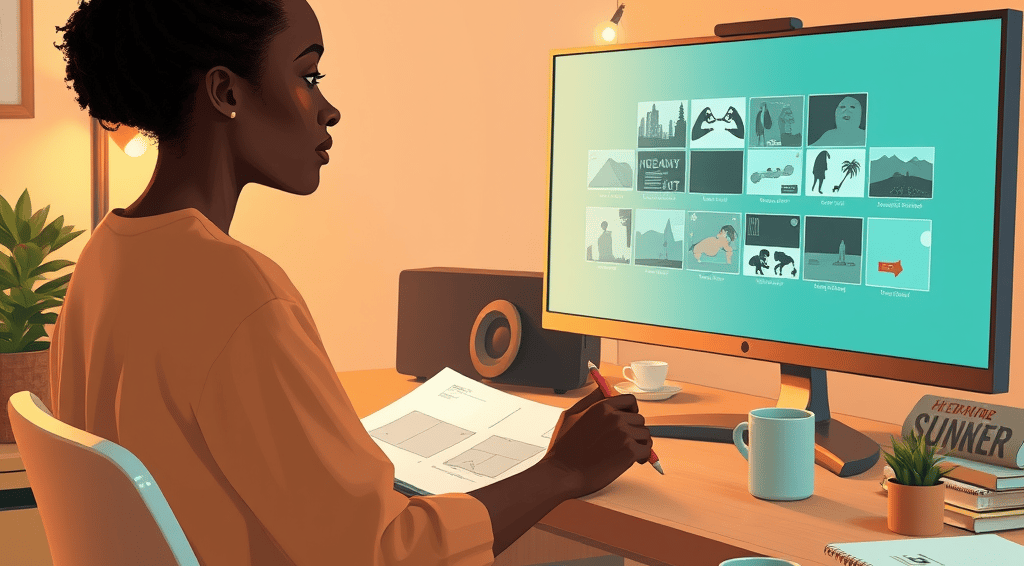
The first time I used an AI tool to speed up a storyboard, I felt a little guilty. It sounded like cheating. I pictured some soulless algorithm spitting out neat frames while I sat back with my tea. Instead, what happened surprised me: the machine did the heavy lifting, and I found more room to be human.
This is where most people get it wrong — AI didn’t take my job. It amplified the parts I love: the choices, the voice, the tiny emotional details that make an animation feel honest. What used to be 80% technical and 20% creative shifted. Suddenly, I had hours back to dig deeper into character, rhythm, and meaning.
How I actually use AI
I start with the same thing I always have: a line, an emotion, a rough idea. Then I feed the kernel into an AI tool — not to replace my style, but to explore variations faster. I’ll ask for three visual directions: one playful, one minimal, one cinematic. The outputs are never final. They’re conversation starters that push my imagination.
For example, on a recent book-trailer project, an AI-generated layout suggested an unexpected camera angle for a pivotal scene. I tried it, tweaked the poses by hand, and the scene gained a fresh intimacy I hadn’t planned. The AI accelerated discovery; I added the soul.
The real collaboration: human + machine
The key is partnership. I’m careful about what I hand to the AI and what I keep. The script, the emotional beats, the brand tone — those are mine. I use AI for experimentation: colour palettes, background variations, quick in-between frames, or to test pacing. When I combine those experiments with hand-drawn refinements, the final product feels both efficient and human.
There are technical wins, too. AI tools can speed up rotoscoping, generate plausible backgrounds, or suggest motion easing. That removes repetitive work and lets me focus on story beats. But it also feels like editing a band: you keep the best riffs and discard the noise.
Where it gets messy — and valuable
There’s a temptation to let AI smooth everything, to accept the prettiest option on the first try. I push back. Sometimes the “ugly” frame communicates vulnerability better than a perfect render. So I intentionally break the polish in places — a shaky line, a rough erase stroke — to keep friction and humanity.
Another mess is ethics: credits, transparency, and fair use. I’m honest with clients about which parts were AI-assisted. That builds trust. It also sparks conversations about creative ownership that are necessary as tools change.
What I want creators to know
Use AI as a tool, not a shortcut. Let it surprise you, but don’t outsource your judgment.
Keep the emotional architecture in your control. Story is not optional.
Be transparent with collaborators and clients about your process.
Why this matters for authors and small businesses
For authors, AI+animation means faster prototypes of book trailers and scene moodboards, so you can test what resonates with readers before committing to a full video. For small businesses, it means more affordable, high-quality visual storytelling that still reflects who you are.
I’ve seen authors cry when they first see their words animated — not because of the smooth lines, but because the short piece captured their voice. AI helped me get there faster, but the choice of what to animate and how to pace it came from long conversations and careful listening.
The future I’m excited about
I don’t think machines will ever replace the messy, stubborn heart of a human creator. They’ll free us to take bigger risks, to chase subtler feelings, and to iterate without burnout. That feels like permission to be braver with every project.
If you’re curious about blending AI into your animation or book trailer — and you want it to stay human — I’d love to talk about how we can use tools creatively without losing your voice.
The Doodle Spine
For all inquiries, contact us at:
Thedoodlespine@gmail.com
© 2026 The Doodle Spine. All rights reserved. | Privacy Policy